5 Metrics That Stop You Losing Customers Before They Buy
Apr 03, 2026
You’re spending on ads, traffic is coming in and your analytics look busy. But sales aren’t following.
That gap isn’t a simply a conversion problem. It’s happening much earlier in the customers journey with your brand - in how customers decide whether to stay or leave.
Reality Check
Many brands assume conversion is the issue because that’s where revenue is visible. But customers don’t suddenly decide to buy at checkout. They decide much earlier.
People don’t buy because you tell them to. They buy because they feel confident enough to continue.
If that confidence isn’t built early, the rest of your funnel never gets a chance.
You Don’t Have A Conversion Problem
You have a Curiosity problem.
Within the 5C Ecommerce Growth System, Curiosity is where your captivated audience either develops into intent to buy - or disappears.
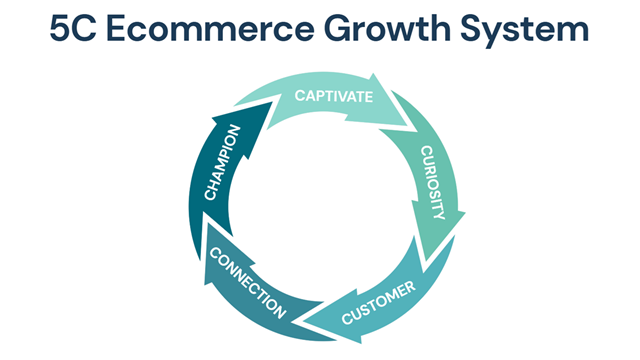
At the curiosity stage, customers are doing three things:
- Assessing if your product is relevant
- Comparing you to alternatives
- Deciding if they trust you enough to keep exploring
Most brands invest heavily in captivating new customers and building brand awareness but don’t optimise what happens next.
And that’s where efficiency breaks.
What Curiosity Actually Looks Like In Practice
Curiosity isn’t about clicks alone. It’s about behaviour after the click. When it’s working, you’ll see:
- Users moving beyond landing pages
- Exploration across categories or products
- Return visits before purchase
When it’s not:
- One-page sessions
- Immediate exits
- Paid traffic that never engages
That difference is where your margin is won or lost.
The Metrics That Matter At This Stage
1. Sessions And Unique Visitors: Volume vs Quality
Traffic matters but only if it’s the right traffic.
High sessions with low progression usually signal weak targeting or unclear messaging.
Returning visitors on the other hand, are one of the strongest early indicators of intent building.
If people come back, something is working. If they don’t, you’ve lost them too early.
2. Traffic Source: Your Intent Filter
Not all traffic carries the same commercial value.
Break your performance down by channel:
- Paid ads
- Organic search
- Social
- Direct
Then ask a simple question: who actually engages?
If paid traffic is bouncing quickly, you’re effectively paying for disinterest.
If organic traffic explores deeper, that’s where intent is naturally stronger.
This is where customer acquisition cost (CAC) starts creeping up without you noticing.
3. Bounce Rate: Your First Impression Test
Bounce rate tells you whether expectation matches reality.
A useful way to interpret it:
- Under 40%: strong alignment
- 40–60%: acceptable but needs improvement
- Over 60%: clear disconnect
If someone clicks and leaves immediately, something didn’t land - messaging, product, pricing or trust.
This is rarely a technical issue (unless your site speed isn't great). It’s usually a positioning issue.
4. Click Through Rate (CTR): Your Curiosity Trigger
CTR is one of the earliest signals of intent. It shows whether people are motivated to take the next step:
- From ad to site
- From homepage to product
- From email to landing page
If users aren’t clicking, they’re not convinced.
Before you fix conversion rates, you need to fix movement.
5. Pages Per Session
This is where you see how deeply people engage.
Strong Curiosity looks like:
- Multiple product views
- Category browsing
- Time spent comparing
Weak Curiosity looks like:
- One page
- No interaction
- Exit
This is the closest thing you have to watching someone think.
The Commercial Impact Of Getting This Wrong
If Curiosity underperforms, everything downstream becomes harder.
You’ll see:
- Rising Customer Acquisition Costs (CAC) as you pay for wasted traffic
- Lower conversion rates at purchase
- Reduced customer lifetime value (LTV) from poor-quality customers
Most founders try to fix this by scaling spend or tweaking checkout. But the real fix for sustainable growth is needed earlier - where intent is built.
How To Diagnose A Weak Curiosity Stage
Look at your data together, not in isolation:
- High traffic + high bounce rate = mismatch in messaging
- Good click through rate + low engagement = weak on-site experience
- Strong organic engagement + weak paid engagement = targeting issue
- Low returning visitors = no reason to come back
This isn’t about one metric. It’s about the pattern they create.
Conversion Starts Before The Sale
Improving Curiosity doesn’t just lift conversions - it improves the efficiency of your entire growth system.
Better traffic quality.
Stronger intent.
More profitable scaling.
Because conversion doesn’t start at checkout. It starts the moment someone decides to stay.
If you're serious about scaling your sales this year, understanding and implementing the 5C Ecommerce Growth System is essential. Otherwise, you risk increasing ad spend without real confidence that the traffic you’re paying for will convert into sales.
If you want to understand the full ecommerce growth system, be guided through it step by step and get the tools and templates to apply it properly in your business, Revenue Revolution will help you turn the theory into a personalised plan for growth.
Author

Want to read more? Take a look at our ← Previous Post or Next Post → or browse All Our Posts