What Actually Counts as Ecommerce? And Why It Matters for Growth
Apr 24, 2026
You’re driving traffic, interest is building but growth still isn’t consistent. That’s usually not a marketing problem - it’s a misalignment problem.
If you haven’t clearly defined what type of ecommerce business you’re running, you’ll struggle to build a system that scales.
Where This Starts To Break Down
Many brands assume ecommerce only applies if there’s a checkout on a website.
So if they sell through DMs, proposals, invoices or calls, they don’t treat themselves as ecommerce businesses. That creates a growth gap.
Because if you don’t see yourself as ecommerce, you don’t build like one. You miss the structure behind how customers actually behave and buy online and everything starts to feel inconsistent as a result.
In practice, that usually shows up as:
- Tracking the wrong metrics
- A disconnected customer journey
- Conversion and retention that feel unpredictable
People don’t buy because you tell them to. They buy because they trust what they see and most of that decision now happens before anyone reaches a payment stage.
Ecommerce Is Defined By The Journey - Not The Payment
Ecommerce has generally been reduced to “selling products online”. In reality, it includes both products and services and is defined by how the transaction is driven, not just how it’s completed.
If your customer:
- Finds you online
- Evaluates your offer online
- Decides to buy based on that journey
You’re already operating an ecommerce model.
That might look like:
- A traditional website checkout
- A payment link or Stripe invoice
- Monthly invoicing after inbound enquiries
- A deal closed via email after interest
The payment mechanism changes but the customer journey doesn’t.
The 4 Types Of Ecommerce Businesses
Getting clear on your model changes how you approach everything - from marketing channels to performance expectations.
1. B2C (Business To Consumer)
This is the most recognisable ecommerce model, where you’re selling directly to individual customers.
Purchases tend to be quicker and more emotion-led, which is why creative, product positioning and on-site experience have such a strong influence on performance.
You’ll typically see this across:
- Replenishment products like skincare or supplements, where repeat purchase drives growth
- Fashion or home “sets” designed for discovery and bundling
- Gifting or seasonal products driven by urgency
From a commercial perspective, this model is usually judged on:
- Cost per acquisition (CAC)
- Conversion rate
- Average order value (AOV)
2. B2B (Business To Business)
This is where many founders misclassify themselves, particularly if there’s no checkout involved.
If your leads are generated online - through content, ads or outbound - you’re still operating within ecommerce. The difference is in how customers buy.
Decisions take longer, values are higher and trust is built over multiple touchpoints.
This model commonly includes:
- Wholesale ecommerce brands
- Corporate gifting suppliers
- Service-based ecommerce such as programmes, retainers or bookable services
Performance is typically measured through:
- Cost per lead
- Lead-to-opportunity rate
- Close rate and deal size
3. C2C (Consumer To Consumer)
In this model, you’re facilitating transactions between individuals, usually through a platform or marketplace.
Discovery is driven by search and browsing, while trust plays a central role in whether a transaction actually happens.
Typical examples include resale platforms, peer-to-peer marketplaces and listing-based businesses, where the platform experience directly influences conversion.
Key performance indicators tend to focus on:
- Listing visibility
- Engagement per listing
- Transaction completion rate
4. C2B (Consumer To Business)
This is where individuals sell to businesses, often built around expertise, content or audience.
The buying decision is closely tied to positioning and perceived value, which means your brand (or personal brand) plays a central role in conversion.
You’ll often see this across:
- Freelancers and consultants
- Creators working with brands
- Coaches or programme providers
Rather than checkout metrics, performance is driven by:
- Enquiry rate
- Conversion to client
- Average contract value
Why This Matters For Growth
If your model isn’t clearly defined, your strategy will always feel slightly off and you end up applying the wrong expectations to the wrong type of business.
That often looks like:
- A service-based ecommerce brand tracking add-to-cart instead of lead quality
- A B2B business expecting immediate conversions from cold traffic
- A product brand focusing heavily on acquisition but ignoring retention
None of these are marketing problems - they’re alignment problems.
When you understand how your customers actually buy, your metrics, timelines and decisions start to make sense. That’s when performance becomes more predictable and growth becomes easier to scale.
How The Ecommerce Journey Plays Out
Every ecommerce business follows the same underlying journey - the difference is how each stage shows up depending on your model.
1. Captivate
This is the awareness stage, where customers first discover you.
Depending on your model, this might come from:
- Paid social and influencers (common in B2C)
- Content, partnerships or outbound (typical in B2B)
- SEO and marketplace visibility (key for C2C)
- Personal brand and authority (central to C2B)
2. Curiosity
This is where consideration happens and where customers actively evaluate whether to trust you.
That evaluation might happen through:
- Product pages, reviews or bundles
- Case studies, demos and credibility signals
- Ratings and platform trust indicators
- Portfolio, positioning and proof of expertise
3. Customer
This is the purchase stage and where the biggest misconception sits. Not all ecommerce businesses convert through a checkout.
Instead, conversion might happen through:
- Website checkout (common in B2C)
- Calls, proposals or invoicing (typical in B2B)
- Platform transactions (in C2C environments)
- Agreements or retainers (in C2B models)
A checkout is simply one version of conversion, not the definition of it.
4. Connection
This is the retention stage, where long-term growth is built.
In practice, this often looks like:
- Email and SMS driving repeat purchase
- Account management and repeat contracts
- Continued platform usage
- Ongoing client relationships
5. Champion
This is where your growth compounds through advocacy.
That usually comes from:
- Reviews, referrals and user-generated content
- Case studies and testimonials
- Community and network effects
- Word of mouth and reputation
Turn Your Model Into A Growth Plan
Once you’ve identified what type of ecommerce business you’re running, the next step is turning that into a strategy that actually works for your model.
Because knowing your model isn’t the end goal - it’s the starting point.
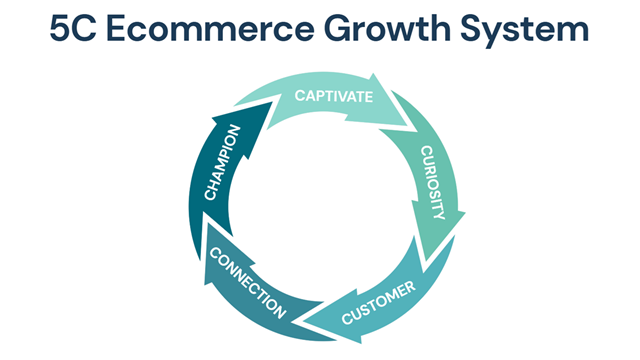
Inside Revenue Revolution, you build your plan using our 5C Ecommerce Growth Framework - Captivate → Curiosity → Customer → Connection → Champion - so every stage of your growth is aligned to how your customers actually buy.
That means you’re not guessing what to do next. You’re building a system that connects:
- How you attract attention (Captivate)
- How you build trust and intent (Curiosity)
- How you convert (Customer)
- How you retain and increase value (Connection)
- How you turn customers into advocates (Champion)
Instead of disconnected tactics, you end up with a clear, commercially aligned growth plan tailored to your business model.
If you want a more structured way to grow, without second-guessing your strategy, Revenue Revolution is the place to start.
Author

Want to read more? Take a look at our ← Previous Post or browse All Our Posts